
Overnight Vision Correction
Wear it at night.
See clearly
all day.
Cilia is the lens your doctor prescribed. A non-invasive overnight treatment that lets you wake up with clear vision. No glasses, no contacts, no surgery, nothing during the day.

Nearsightedness typically stabilizes in the early twenties. The slower the progression during childhood, the lower the prescription your child ends up with for life.
For children
Slowing nearsightedness during the years it matters most.
In most children, nearsightedness tends to get worse over time. The eye keeps growing a little longer each year, and the years between ages 8 and 18 are when that growth is fastest. Cilia gently reshapes the front of the eye overnight, so your child wakes up seeing clearly. Over time, it also slows the rate at which nearsightedness gets worse.
The effect is not permanent. If your child stops wearing Cilia, vision gradually returns to where it was before. The treatment is reversible and fully monitored by your doctor at every step.
For adults
Clear days, every day. Nothing in your eyes.
Adults use Cilia for a different reason: not to slow progression, but for clear daytime vision without glasses or surgery. The lens is worn overnight. By morning, your vision is clear, with nothing in your eyes all day.
Ask your eye care provider whether Cilia suits your prescription. The correction is not permanent. If you stop wearing Cilia, your vision gradually returns to where it was before.
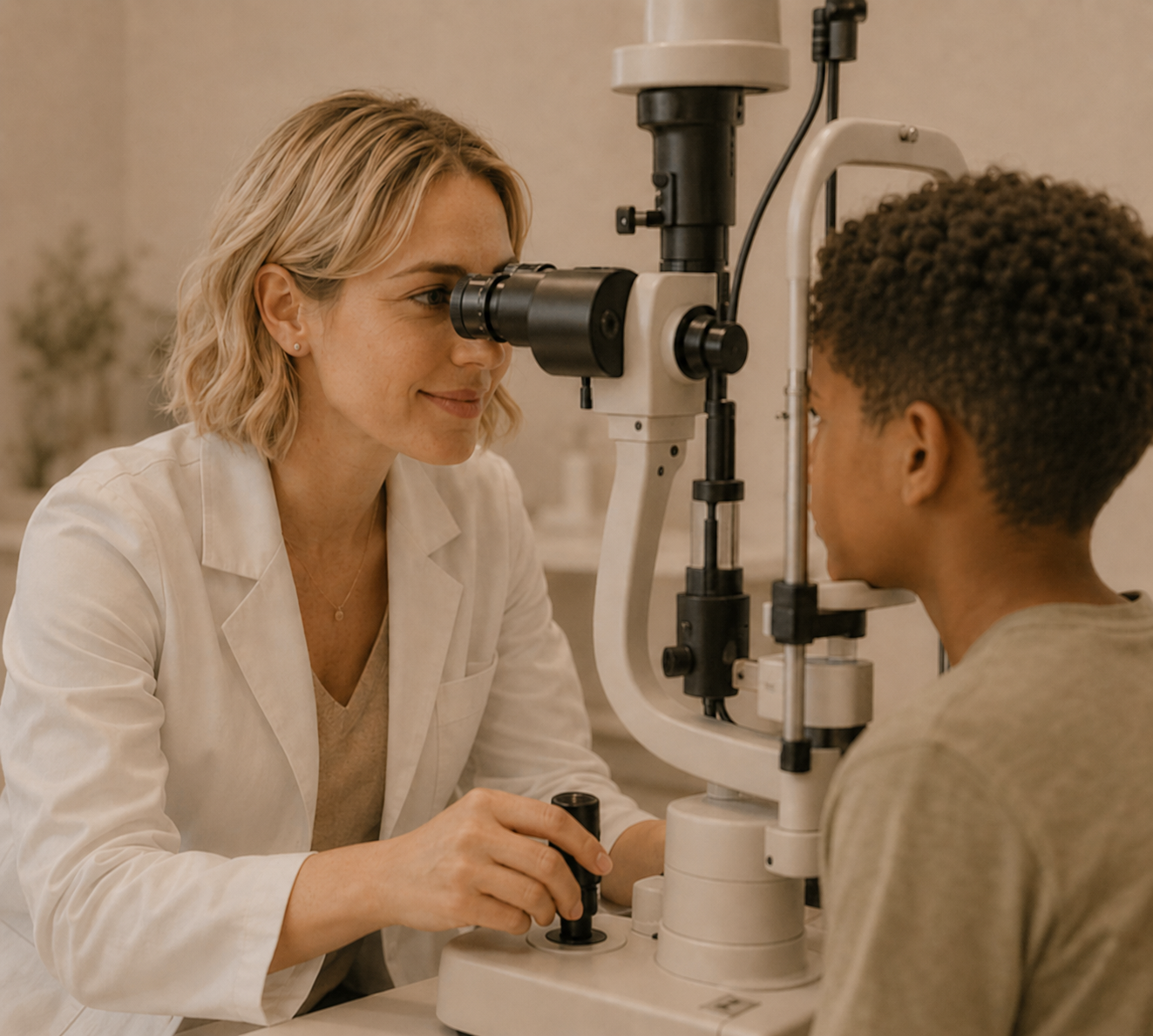
Clinical evidence
The results are measurable.
Based on a 418-eye, 12-month clinical study.
Trusted by eye care professionals
Prescribed by the doctors who know.
"Most parents come in asking for stronger glasses. When I explain that glasses only correct vision while Cilia actively slows the progression, the difference becomes very clear to them."
"Children wearing glasses or daytime contacts still have a prescription that climbs every year. With Cilia, we are not just correcting vision. We are managing the underlying condition."
"For active kids, the lifestyle difference is significant. No glasses to break, no lenses to manage at school. Parents notice how much easier daily life becomes."
What the process looks like
Trained by experts.
Powered by AI.
Proven by outcomes.
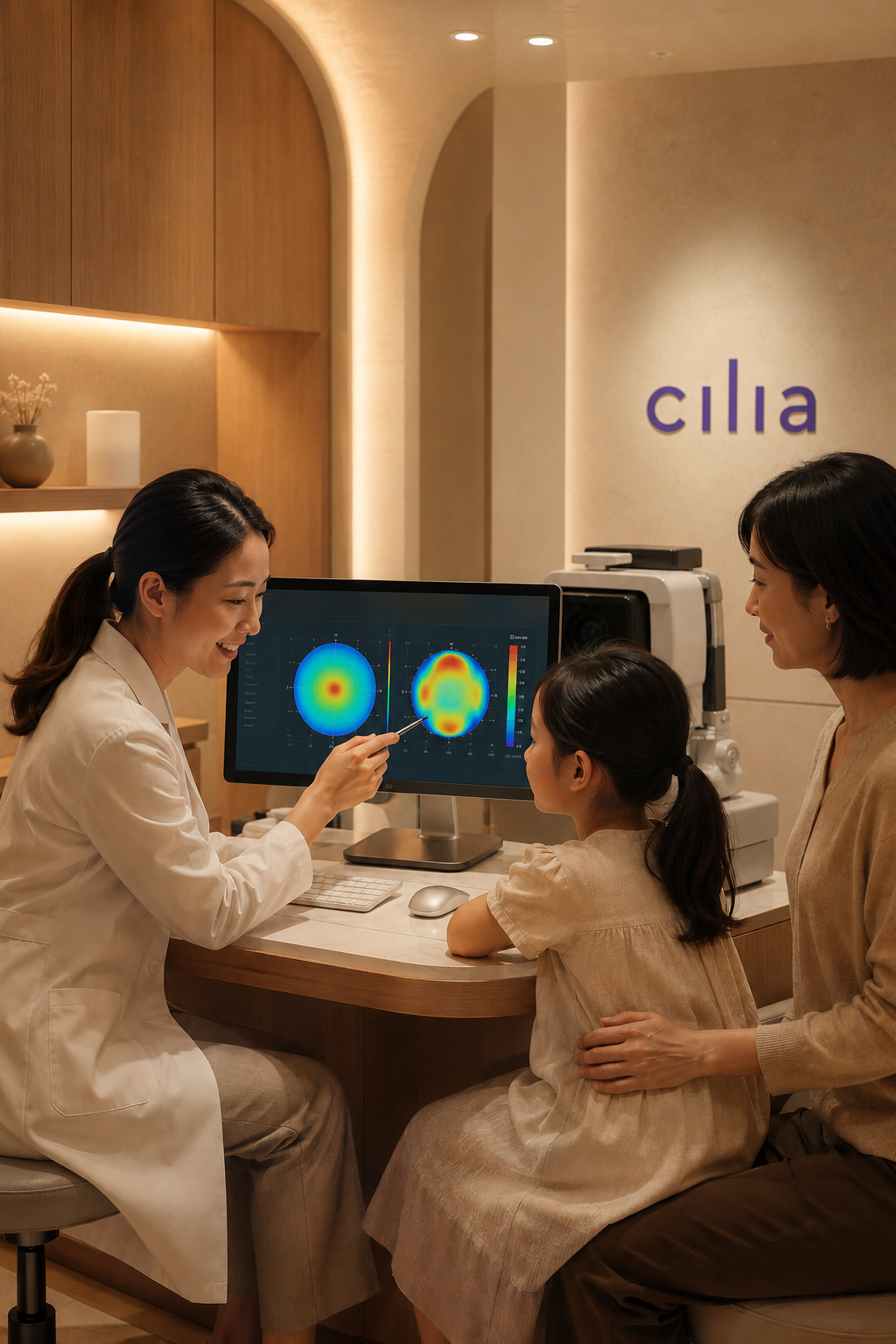
Eye scan
Your doctor scans the surface of your eye. It takes a few minutes and nothing touches your eye. The result is a detailed map that tells Cilia's AI exactly what shape your eye is.
Custom lens design
Cilia's AI uses the scan to design a lens specifically shaped for your eye. Your doctor reviews the design and can make adjustments before anything is ordered.
First fitting
You try the lens. Because the AI designed it for your eye, most people get a good result on the first try. Your doctor checks in within the first week to confirm everything is working.
Ongoing monitoring
Your doctor sees you every 3 months to track progress. For children, that means checking whether the eye is still growing; for adults, whether the prescription has stayed stable. The lens design can be adjusted at any point.
For adults
Not just for children.
Adults use Cilia for a different reason than children do. At this stage, slowing progression matters less. What matters is waking up seeing clearly, without anything to put on — and Cilia handles that while you sleep.
No daytime lenses, no glasses to put on. The lens stays in its case all day. You don't think about it.
Eligibility. Adults with mild to moderate nearsightedness are usually good candidates. Some conditions — very dry eyes, unusually shaped corneas, or a very strong prescription — may affect suitability. Your doctor will check during the initial consultation.
of patients could see clearly without glasses after 12 months, in both children and adults.
of sleep is all it takes. Cilia works overnight. You do not need to change your routine.
Perspective
Why not just glasses?
Glasses and contacts are safe, familiar, and work well for day-to-day vision. But they address a different problem than Cilia does.
The limitation
Glasses and contacts correct blurry vision in the moment. They do not slow the underlying cause of nearsightedness: the gradual growth of the eye itself.
In children, that growth continues year after year regardless of whether the prescription is kept up to date. Each worsening prescription is a sign that the eye has grown longer.
Severe nearsightedness raises the risk of serious eye problems later in life, including retinal detachment and glaucoma. Slowing how much the eye grows during childhood reduces that risk.
The difference
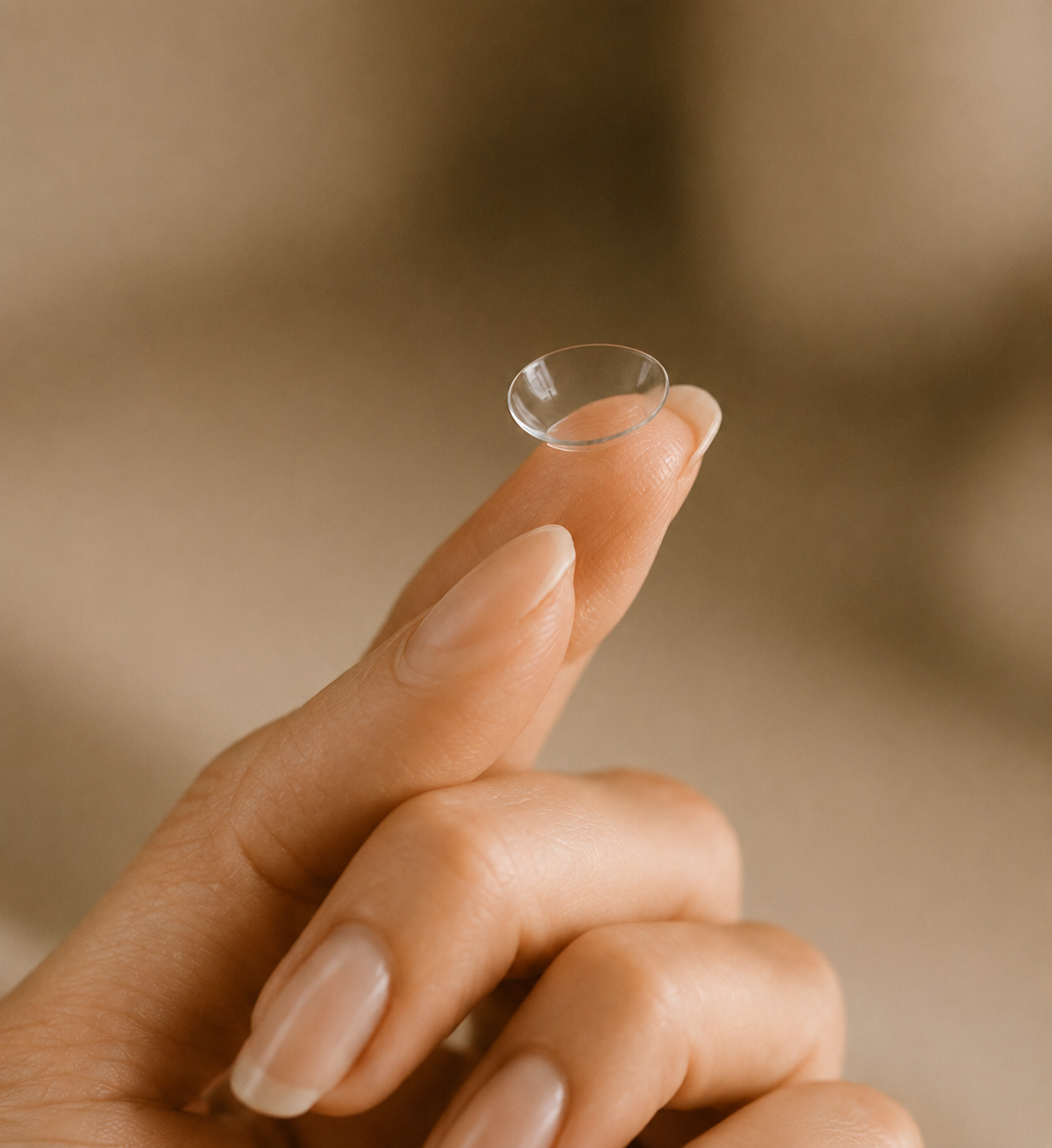
The lens gently reshapes the front of the eye during sleep, so you can see clearly throughout the day.
Clinical studies show it also slows eye growth in children, particularly between ages 8 and 18 when the eye tends to grow fastest.
Because the lens is removed each morning, there is nothing to wear during the day. No restrictions on sports, swimming, or any other activity. If your child stops wearing Cilia, vision gradually returns to where it was before, over a few days to a few weeks.
Questions
Common questions.
Nearsightedness means the eye can focus clearly on things that are close, but objects at a distance appear blurry. It happens because the eye has grown slightly longer than normal, causing light to focus just in front of the retina instead of directly on it. It is one of the most common vision conditions in children worldwide, and in most cases it continues to worsen through childhood and adolescence.
Children have no reference for what normal vision looks like. If their vision has always been blurry at a distance, they assume that is how everyone sees the world. Many children adapt without complaint, sitting closer to the board, squinting, or avoiding activities that involve seeing far away. They often go years without realising something is wrong.
Family history is a meaningful risk factor. If one parent is nearsighted, a child's likelihood of developing nearsightedness is noticeably higher. If both parents are nearsighted, the risk is higher still. That said, genetics is not the whole story. Time spent outdoors and close-up screen time also play a role.
When fitted correctly and worn according to your doctor's instructions, with regular follow-up appointments, Cilia is safe. Complications are rare and the risk is further reduced by the precision of the AI fitting process. Your doctor will recommend check-ins every 3 months.
A mild awareness of the lens is normal in the first few days. Most people adapt within a week. If discomfort persists or worsens, contact your doctor.
The correction is not permanent. Vision gradually returns to where it was before, over a few days to a few weeks. There is no lasting change to the eye.
Yes. While the main reason doctors prescribe Cilia for children is to slow nearsightedness, adults get the same overnight correction for glasses-free daytime vision. The fitting process, lens design, and results are the same. Ask your doctor whether Cilia suits your prescription.
Children aged 8 and above with nearsightedness are typically strong candidates, particularly those whose prescription has been getting stronger each year. Adults with mild to moderate nearsightedness are also eligible. Your doctor will assess suitability during an initial consultation.
Most people notice clearer vision within the first week or two. For milder prescriptions, stable daytime vision usually arrives within 2 to 4 weeks.
None. Cilia is worn overnight and removed each morning. You go through the day completely lens-free, with no restrictions on sport, swimming, or any other activity.
Ask your doctor's clinic directly. They handle the eye scans, lens fitting, and follow-up appointments. Cilia is only available through trained, certified eye care providers.
Get started
Your doctor recommended Cilia. Now you know why.
Cilia is available through certified eye care providers. If you have questions before your next appointment, we're here.
Contact us
Are you an eye care professional?
Learn how to bring AI-powered lens fitting to your practice and offer Cilia to your patients.